Archive for the 'Uncategorized' Category


Glory Days

I think I’m going down to the well tonight

And I’m going to drink till I get my fill

And I hope when I get old I don’t sit around thinking about it

But I probably will

Yeah, just sitting back trying to recapture

A little of the glory of, well time slips away

And leaves you with nothing mister

but Boring stories of

glory days

 Glory days well they’ll pass you by

Glory days in the wink of a young girl’s eye

Glory days, glory days

If you recall from my last post, my 30th High School Reunion happened recently.  A part of me thought I would walk in to the opening night festivities at the VFW Hall  to something that resembled this Bruce Springsteen song – a room full of upper 40-somethings stuck in the glory days of the late 80s.

I am happy to report that was not the case.  Instead I walked into a room full of people that were genuinely happy to see old friends and in some cases meet new friends.  Sure there was plenty of talk about our high school antics, but there was also talk about families, jobs, sports, the weather, maybe some politics, and many other topics.  Not once did I talk to someone who thought their glory days peaked in 1987.

Due to family commitments (my own daughter was having her senior prom the same weekend), I was not able to stay for all the events of the weekend, but I was able to catch a couple of them.  After the Friday night VFW mixer, about 90 of us came together to walk the halls of our old high school on Saturday morning.  The campus, part of which was originally an elementary school, had been converted into a junior high school at some point after our graduation.  And as part of some upcoming construction projects, all the existing buildings will soon have a date with a wrecking ball.  Thanks to the current school superintendent, a fellow 1987 graduate, we were able to take a final stroll down memory lane through the halls of our school.  We also gathered in the gym to take a class picture and hear some thoughts from a few classmates.

One of my lifelong friends (Mary Olga) had asked a few days prior that I be one of those to share a few thoughts.  Not being one to shy away from sharing my wisdom, I promptly accepted.  While I totally adlibbed things that morning, I did actually have some thoughts jotted down, so I thought I would share those with you:

30 years ago I was given the honor of standing in front of you at Wagstaff Gym to lead us in the Pledge of Allegiance.  If I recall it was some form of consolation for not being quite smart enough to be our Valedictorian or Salutatorian.  So when Mary Olga messaged me to ask if I would say a few words this morning, I thought “awesome, these people are finally going to have to sit through a speech from me.”  Then she told me I was limited to 2 minutes, so I guess you are still getting off easy.

Being back here on this campus where many of us started and ended our time in Whitehouse schools brings back a flood of memories.  Not very many people can say they attended Kindergarten and Physics class in the same room – but I am blessed to say I did.  Thank you Dr Moran for letting us spend a few last moments here before you call in the wrecking ball next year.

And being in this gym especially brings back into focus my pedestrian, at best, basketball career.   Coach Nix was right, I was too slow and too short for the game. That said, I was able to turn that hoops experience into an impressive 13-10 record in two seasons as a volunteer coach for a  girls junior high basketball team , leaving me just a few victories shy of his win total.

Since leaving here in 1987, I have been fortunate to meet thousands of great people from all over the world, but this place and the people here hold a special place with me .  I don’t make it back to Whitehouse very often and I rarely talk to any of you, but the memories from my first 18 years of life are always top of mind. All of you had a hand in forming those memories –  For that, I say thank you. I sincerely hope you all feel the same way about our fellow classmates.

My oldest daughter just finished up four years of high school cheer and my other daughter will be taking her place on the high school squad next year, so I have become a bit of a cheer dad in recent years.  So, in conclusion I am going to ask for any cheerleaders that are in the house to come on down and join me.

We’re from Whitehouse, couldn’t be prouder, if you can’t hear us, we’ll yell a little louder   (3 times)

I need to once again give Heather and Kelly, my varsity cheerleaders, props for being called out of the stands on the spot and joining me in the cheer.

Sadly I had to bolt out of town back to Austin as soon as we were done at the gym, but I heard that the main event Saturday night was nothing short of awesome.  From the pictures posted on Facebook, it looked to be a party for the ages.  More props to all those that had a hand in planning the weekend.

As my oldest daughter prepares to graduate from high school, I only hope that 30 years from now she can attend an equally fulfilling reunion.

Oh, in case I have not told you:  I’m from Whitehouse and I couldn’t be prouder!
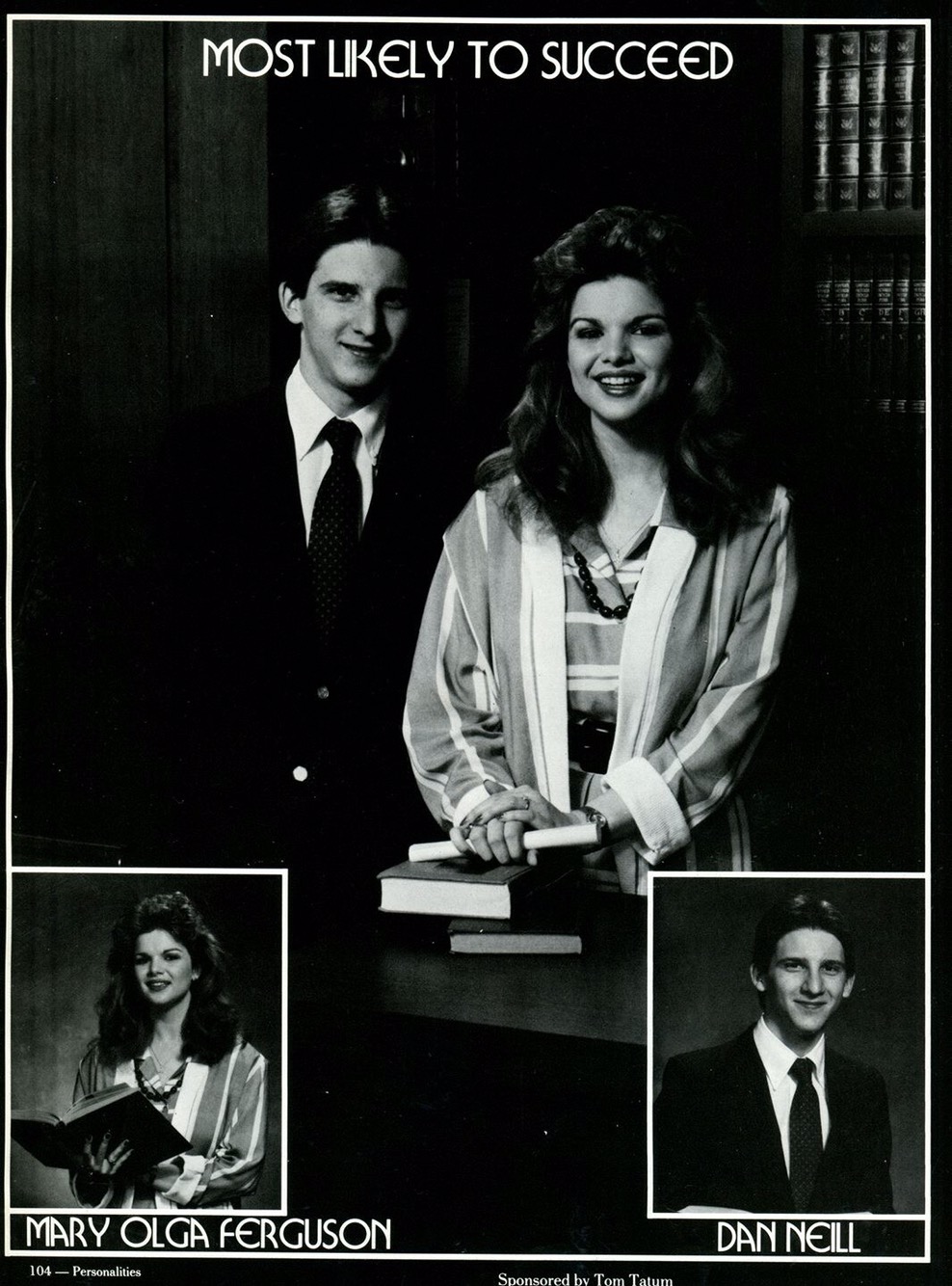
Most Likely to Succeed?

All hail to Whitehouse High School,

All hail to you,

For truth and knowledge,

We will ere be true,

Always in our memories,

Forever in our hearts,

We will remember,

Dear Whitehouse High.

WHS

My 30th high school reunion is coming up next month.  Even though I have not seen the large majority of them in many years, thanks to the popularity of social media apps, I have been able to keep tabs on many of my high school classmates.  That said, I am looking forward to attending the event and seeing people that were a huge part of my childhood.

As I started to talk about the upcoming reunion, my daughters had me drag out the high school year book so they could check out the teenage version of dad.  One of the things they noticed in my yearbook was the Senior Superlatives.  Specifically, they zeroed in on the page showing me (along with the awesome Mary Olga Ferguson) as The Most Likely To Succeed.  A few days later, my oldest daughter asked me if I thought I was the most successful person out of my high school class.

I am pretty sure the 18-year-old me thought of success only in terms of money.  I am certain I had visions of returning to my high school reunion by private jet, rolling up to the venue in a high dollar sports car while wearing a very expensive Armani suit. And then telling fascinating stories of my exploits as a retired multi-millionaire business executive.

Thankfully, the 48-year-old me knows that money and wealth are not the measures of success.  I may not be able to point to the perfect measure of success, but I know the size of my bank account is not it.  I also know that the only person who’s measurement of your success that is accurate and matters is you.  If you are happy with your life and content with yourself, then you more than likely see yourself as successful.  Your job title, the size of your house, the type of car you drive, the size of your retirement account does not matter.

So, do I see myself as being successful?  Absolutely.  I met and married the love of my life, have two teenage daughters that act like teenagers, have a dog that thinks I hung the moon (dogs have a way of making you feel loved), have had the chance to coach a  number of kids the basics of basketball and to a lesser extent soccer, have seen some interesting parts of the United States and a smattering of other countries, have attended a large number of concerts, have sang Sweet Caroline karaoke style on a bus going through the streets of Manila while drinking a beer at 7:00 in the morning, have been involved with supporting three different Catholic schools, and have met people from all over the world that I count as friends.  I feel like I have in my own small way made an impact on the world.  Life hasn’t been perfect, but it’s been good. So in my book, I’m marking it down as successful.

Do I think I am the most successful person out of my high school class?  That is a question that cannot be answered.  Actually, it is a question that should not even be asked.  No one can say that one person is more successful than another. One person’s success cannot be stacked and ranked against the success of others.  My hope is that there are 200+ fellow Whitehouse High School graduates of the class of 1987 that all see themselves as successful.  I plan on walking into a room full of successful people – none more successful than the rest. A room full of people in their late 40s that have weaved their way through life’s hills and valleys and are still bringing the good fight everyday.

So for any of my fellow classmates that thought they might see the class Most Likely to Succeed recipient flying into Tyler Pounds Field on his personal Learjet and jumping in a black stretch limo and walking in with a high-dollar slick-Rick suit on, I am sorry to disappoint you.  You will have to settle for seeing me roll into town in my well used 2009 Saab 9-3, maybe with an iced-down Yeti in the trunk and perhaps wearing faded jeans, a Ramones tshirt, and flip-flops with a built-in bottle opener.  That might get me kicked out of the Secret Society of Most Likely to Succeeders, but that’s OK.  I’ll be the guy smiling and laughing while reconnecting with my fellow Wildcats.

WHS!


The Bloody Project – Another Lesson From the Course

I’m alright and nobody worry ’bout me

Why you got to gimme a fight, can’t you just let me be?

These are the unmistakable opening lines of the theme song to Caddyshack.  As a fan of slapstick comedy and of the game of golf, I have to rate it as one of the classic movies from the 80’s.

One of the  benefits of my recent career changes was to have a little more flexibility in my schedule; a flexibility that would allow me to spend more time with my family.  Last week, I had the chance to exercise that flexibility and booked a round of golf with my oldest daughter and one of her friends.  With my less than spectacular golf skills, I highly suspected there could be a slapstick moment on the course.

It was a typical winter day in Central Texas – sunny, not hot but not cold, not windy – a day my friends in northern climates couldn’t even imagine exists in late January.  After working from the world headquarters of Nice Socks Consulting for the morning, I headed to our home course at Avery Ranch Golf to meet them when they got out of school that afternoon.  I was excited to spend some quality time with her before she heads off to a college yet to be determined later this year.

The course was not busy so we were excited about enjoying a casual round without anyone pressing on us.  As we teed up on the first hole, little did I know that our round would be far from casual.  My daughter’s drive pushed a little right of the fairway, ending up on a slight slope near a small outcropping of limestone just to the front and right of where her ball landed. She was about 120 yards from the green and confident she could be on the green in regulation. Unfortunately, the 2nd shot did not go as planned.  Her ball hit the rock outcropping (yes, she let the club face open up) and bounced directly back, striking her in the head.

At first I was not sure what had just happened.  I was watching for the flight of the ball and when I did not see the ball in the air, turned around to see her kneeling on the ground.  She had her hand on her forehead and when she moved her hand, I saw the blood.  Lots of blood.  I ran to my cart and grabbed a golf towel to apply pressure and slow down the bleeding. I won’t go into the gory details of the next few hours.  However, I will let you know that after 7 stitches expertly applied by a plastic surgeon, she was all good.  No concussion. No life altering injury.  Just a nasty wound that will heal and hopefully leave nothing but a faint scar.

As I am apt to do, once I knew for certain that this incident was not going to result in long-lasting impact on my daughter’s health and well-being, I started to think about what I could learn from this life event.  At first my mind went to thinking about being prepared for the unexpected. However, the more I thought about it, the more I began to see that the potential for a project management lesson to come out of this unfortunate event.  This angle is probably due to the fact that my first consulting engagement since going out on my own is focused on driving a significant solution platform rationalization project.

Most projects start off with a well thought out plan with well-defined milestones and details on the steps required to meet those milestones.  The approach to a round of golf is similar.  You know the par on each hole and know in general where you need each shot to go in order to meet or beat par.  But we all know that not everything goes according to plan on the course nor in the office.  Therefore, you have to be able to adjust as the round unfolds; you have to manage the round, just like you have to manage a project.

In the case of my daughter, she had planned for her tee shot to go up the right side of the fairway and land 100-110 yards from the middle of the green. She then planned to hit a nice easy approach shot into the green where she would do no worse than two putt and make par or better.  Instead her tee shot went a little further right than expected and landed in the rough, on uneven ground, near an outcropping of rock, about 10 yards shorter than expected.  Her second shot then proceeded to hit the rock outcropping and end her round prematurely after two strokes.

When assessing what to do after that first shot, she had five options. One option was to play the ball as is and go for the green to get back on plan. The second option was to chip out onto the fairway giving up distance to have a much better position for her next shot.  The other options (per rule 28 of the Rules of Golf) involved declaring the ball unplayable and 1) going back to point of her first shot and hit again under penalty of stroke and distance per rule 27-1; 2) taking a one stroke penalty and dropping a ball behind the point where the ball lay; or 3) taking a one stroke penalty and dropping a ball within two club-lengths of where the ball lay, but not nearer the hole.

The execution against her project plan for Hole #1 was off-track after her drive.  In this case, she decided to take an action to get back on plan with one swift action versus incurring an additional stroke.  I had seen her make similar shots  from similar positions on that very hole before, so in the moment I did not suggest she do otherwise. Sadly, that swift action ended the round and resulted in a trip to the ER.

In hindsight, the safer more practical play would have been to give up distance and punch it into the fairway to set-up her 3rd shot or perhaps declaring the ball unplayable and taking a drop with a penalty stroke.  In either scenario, she would have likely had a ball on the green sitting 3 with a chance to sink a putt for par or at worse bogey.

She made a decision to go for the green rather than take the less risky option of taking an extra stroke on the hole. While the reward for going for the green was large, so was the risks. They say hindsight is 20/20, and in this case I can’t help but second guess not suggesting she choose another option.

Those same decision points haunt project managers.  No matter how well-managed, there are usually issues arise that could potential get a project “off plan.”  Many of those issues are minor and can easily, without introducing more risks into the project, be identified and addressed quickly.  But at times the issues appear abruptly and are significant and can only be solved by either taking a risky bold action that could get your project back on plan in one swift action but also introduce risks of incurring further negative impact to the project (i.e. your project ends up in the ER); or taking a less risky action that has some short-term negative impact (i.e. you take another stroke on the hole) but sets your project up for long-term success.

In the early days of my career I was usually inclined to “go for the green” when faced with one of those decisions as a manager.  But as I gained experienced, I learned that sometimes taking the penalty stroke or just punching out to the fairway is the better course of action.  As a project manager (or any kind of manager for that matter) you have to assess the risks presented you and make a decision that gives you the best chance of achieving the ultimate objective of the project.  Sometimes that means going for the green and other times it means taking a penalty stroke.  The main thing is to keep yourself and your project out of the ER.

Fore!


Flashback: No Slam Dunks In IT

I was looking back through some of my early, circa 2012, musings and came across this gem. I can happily say that I survived my years of managing data centers without ever having to declare a disaster.  However, even with a constant focus on change management processes, I did see my fair share of self-inflicted outages.

I long ago learned that humans are fallible and that all the procedures in the world can’t prevent every mistake.  However, I still believe that following a structured change management process is critical to running a successful IT Operations function and that the key to a good change management process is communication.

While I am currently taking a break from being responsible for IT Operations, if I ever find myself back in that role, I for sure will subscribe to my: ” Plan –> Communicate –> Execute –> Test –> Communicate framework.

Here’s my original thoughts from 2012:

“There are No Slam Dunks in IT.”

That’s a saying I have thrown around for close to 10 years now. But one that I think too many people in technology fail to remember on a daily basis. They get caught up in the urgency of the moment, short cut change management procedures, fail to think about the downstream impact of what they see as a minor, isolated change. All too often the mindset of “the easy change,” “the lay-up,” or “the routine lazy fly ball” ends up as an unexpected outage. That break away slam dunk clanks off the rim and bounces out of bounds. That easy two points turns into a turnover.

As we kicked off 2012, a relatively new to the company network engineer noticed that a top of rack server switch had two fiber uplinks but only one was active. Anxious to make a good impression, he wanted to resolve that issue. It was an admiral thing to do. He was taking initiative to make things better. So one night during the first week of the fresh new year, he executed a change to bring up the second uplink. Things did not go well as the change, and I will not go into the gory technical details, brought down the entire data center network. It was after standard business hours – whatever that means in today’s 24×7 business world – but the impact of that 10 minutes outage was significant. A classic case of a self-inflicted wound from not following good change management procedures.

It was actually a frustrating incident for me, because as we put together the 2012 Business Plan for Corporate Technology Services, we were asked to list the keys to success for our operations and the actions we needed to take achieve success.

THE #1 key for success listed was: Avoid self-inflicted outages and issues that take away cycles from the planned efforts and cause unplanned unavailability of our client facing solutions.

So 30 days prior I had told our CEO, CFO and the rest of the executive management team that our #1 key to success in IT was to avoid such things, yet here I was four days into the new year staring at the carnage of a self-inflicted outage.

Outages are close to a given in the world of technology. Servers will crash, switches will randomly reboot, hard drives will fail, application will act weird, redundancy will fail, and there will be maintenance efforts that we know will cause outages. Given that, every IT organization must take steps to not be the cause of even more outages. Business leaders know that there will be some level of downtime with technology – have you ever seen a 100% SLA? Rarely. It is usually some 99.xx% number. But outages that are caused by the very people charged with keeping things running drives them nuts, and rightfully so.

The morning after that self-inflicted wound, I communicated out the following to every member of the IT organization:

We need to strive to make sure that we are not the cause of any unexpected outages. We must exercise good change management process and follow the five actions listed above. As our solutions and the underlying infrastructure become increasingly intertwined, we must make an extra effort to assess the potential unintended downstream (or upstream) impact as we plan the change.

When making a change we must always follow these steps:

Plan – make sure each change action/project we undertake is well thought out, steps are documented, risks are assessed. If disruption in service is expected, plan for when we make this change to limit the impact of the disruption.

Communicate – communicate each change action/project to the parties potentially impacted prior to executing the change

Execute – flawlessly execute according the plan developed

Test – test to make sure that the change executed resulted in the expected results and there are no unintended consequences from the change

Communicate – communicate to the potentially impacted parties that the change has been completed and tested

To keep this goal of avoiding self-inflicted outages top of mind, we implemented a ‘It’s Been X Days Since our Last Self-Inflicted Outage” counter. Basically taking a page out of the factory accident prevention playbook.

Business Performance: It Takes More Than Hard Work

I’ve got the brains, you’ve got the looks

Let’s make lots of money

You’ve got the brawn, I’ve got the brains

Let’s make lots of money


The Pet Shop Boys made it sound so simple back in the 80s.  But in the real world, achieving financial success in business is a little more complex.  I work for a publicly-traded company, so it is no secret that I am part of a leadership team at the helm of a company that has struggled to achieve the desired level of financial performance in recent times.

Leaders of companies that struggle to consistently show strong performance can become frustrated as they try and find the thing that will break the business free from the rut and set it upon a path of prosperity.  They constantly question what is at the root cause of the performance issues.  Is it the offerings or quality issues or economic headwinds or ineffective marketing or any one of a plethora of other reasons?  All too often one of the answers that pops up is “employee are not working hard enough.”

However, from what I observed at other companies and from what I have directly witnessed in my own career, the cause of financial performance struggles is rarely, if ever, the result of employees (at any level) not trying hard enough.    Several months back I ran into a former senior leader of my current company at a high school basketball game.  As we were talking he said “looks like you guys need to be working harder.”  I paused as he said that and then replied “if spectacular financial performance were as simple as having people work harder, I would have been able to retire years ago.”  He scratched his head for a moment and then told me I had a good point.

Unfortunately the premise of “we just need to have employees work harder” can easily lead to not recognizing and rewarding the work efforts of employees.  In fact during times of challenged performance, it common to see leaders blame employees’ lack of individual performance for the financial woes – alienating the very group of people that can get the company back on track.

One of the things I have been passionate about in recent years is making sure the recognition of employee efforts becomes and remains a part of the company culture.  Even in times when financial performance is not exactly celebration worthy, it is always time to celebrate the heroic efforts employees make to deliver for clients.  At the core of my current company’s employee recognition efforts is a quarterly awards program called “A Promise We Live.”  It is centered on the fact that we make promises to our clients and to each other to deliver what we sold; and that we have to live up to those promises every day.

The program involves employees submitting nominations for the efforts of their fellow employees. It is not a top down program where management determines those that are worthy of consideration; it is driven by employees recognizing the heroic efforts of their co-workers and taking the time to tell others about those efforts.  There is then a panel of managers that read and score the nominations using our published core values as the benchmark.  From that panel review, the best of the best efforts are selected as quarterly winners, but all those that were nominated are celebrated as well.

Each quarter I look forward to reading through the nominations to learn about the lengths our employees go to deliver on our promises.  I am constantly amazed at the level of dedication shown at all levels of staff and from all levels of tenure.  It reinforces for me the fact there are so many talented people throughout the organization and reminds me of all the early mornings, late nights, and week-ends employees sacrifice to service our clients.  It also provides data points that our issues are not caused by lack of effort by employees.  It were just about working harder, our stock price would be through the roof.

I may not have the brains (nor brawn) to know all the answers to all the questions about what holds back a company’s financial performance, but I have decided that simply imploring employees to work harder is not the solution.  I am also smart enough to know that taking the time to recognize and celebrate those truly heroic efforts made by employees every day is a key to performance success.

My closing thought to you is to recognize the extra efforts of those working around you.  Even if your employer does not have a formal recognition program in place, a simple “Thank You” can convey that efforts do not go unnoticed.

Time to Clear Out the Static

Getting nothing but static, getting nothing but static;  Static in my attic from Channel Z

Wow – it feels a little  like I have been living on Channel Z with the B-52s over the past year.  I know my blog has certainly been filled with static for way too long.

It has been right at 18 months since I last posted anything.  Life has been incredibly busy.  CEO changes and taking on new responsibilities at work have taken up much of my time and focus.  Throw in life with two teenagers at home and there has been no time and even less energy to sit down and write.

However, I can feel the itch to get back into the cycle of writing and posting coming on.  The good news is I have 18 months worth of random thoughts bouncing around my head that are begging to make it out.

Stay tuned…..


Staying Safe on the Highway to the Danger Zone


Out along the edges

 Always where I burn to be

 The further on the edge

 The hotter the intensity


 Highway to the Danger Zone

 Gonna take it right into the Danger Zone

 Highway to the Danger Zone

 Ride into the Danger Zone


Back in 1986, Kenny Loggins belted out these lyrics on a song that became synonymous with the movie, Top Gun.  I am pretty sure I have visions of being Maverick and flying my F-14 through the skies like a wild naval aviator.  And I know that in the late 80’s I had no thought that there would be a different kind of “Danger Zone” that almost all of us encounter on a daily basis.  The Danger Zone we call the Internet.

The headlines about security vulnerabilities seem to be popping up at a faster pace than ever.  Issues with Adobe Flash, Internet Explorer, PayPal and eBay have made “front page” news in the mainstream media in recent weeks and Heartbleed Mania seemed to grip the world for several days back in early April.  All these reported dangers make you want to just go offline and avoid the Internet.  However, going offline is not an option for us in our work lives and for many is not an appealing option in our personal lives. 

Fortunately in our work lives we have IT departments that are focused on keeping us safe online while carrying out our daily work tasks.  Every day information technology professionals are making sure our anti-virus software is up-to-date; deploying security updates to web browsers and other software packages; forcing the change of passwords on a regular basis; monitoring network traffic and blocking that traffic when it looks suspicious; preventing access to websites that are known to be compromised or used as launch points for installing malicious software on your computer; and reviewing daily notices of potential security vulnerabilities.  Most of these activities happen behind the scenes without a need for any action on our part.

Unfortunately in our personal lives we do not have a corporate IT team to keep an eye on protecting us.  Each of us has to take actions to protect our own personal computing environment.  The actions you take help protect not only you but also your employer since in many cases we use personal devices for work purposes as well.  Here are 10 things basic things to do with your personal computing that will help protect you and potentially your employer and their customers:

  1. At a minimum, use separate usernames and passwords for work vs personal sites and applications
  2. Where possible, use a unique username and password for each site. A password manager such as Lastpass or Keypass can aide in securely keeping track of those accounts and passwords.
  3. Change your passwords on a regular basis.  A good guide is to change once every 90 days.
  4. Make sure your personal computers have anti-virus and anti-spyware software installed and that updates are applied to the anti-virus software on a regular basis.  These updates can typically be set to happen automatically.
  5. Make sure to install operating system and application (like Microsoft Office) updates on a regular basis.  These updates can typically be set to happen automatically.
  6. Be aware of the websites you visit.  If you click on a link and end up someplace that does not look right, exit from your browser.
  7. Be extremely cautious when asked to input payment and personal information; make sure the URL matches the site you are using and the connection is secured.
  8. When clicking on links via email make sure the link matches the intended destination and does not include a hidden link. 
  9. Only download software/applications from the software publisher’s website or a site the software publisher directs you to for download.
  10. Install Pop up blocker and ad blocker plugins for your web browsers


While we can never be 100% secure when online, the steps taken by our own actions can reduce to chance of being impacted by the dangers that exists online.

I Found Help (and Hope) in Orlando: And I Wasn’t Even Looking For It

Help, I need somebody

Help, not just anybody

Help, you know I need someone

Help

“Help” is one of my favorite songs from that lovable British boy band, The Beatles.  As you start reading this you will more than likely be thinking  “what do these lyrics have to do with these ramblings?”, but stick with me.

I had to attend a company conference this week in Orlando, Florida.  And quite frankly in the days leading up to the conference, I was less than 100% enthused to be attending.  I was going to miss several of my kid’s activities during the week; my wife was going to have to play single parent for most of the week; I was on the agenda to present; and overall I thought “been there, done that.  I’ve seen this show before.”

There is still one day left in the conference, but my attitude has changed.  The feel of the conference; the content of the conference; and what I am getting out of it is much more than I ever imagined.  But that doesn’t make a great story, nor is it what spurred me to write about it.

As part of the conference agenda, we had a social responsibility event.  But unlike some other charitable exercises at these types of events, this was not just going out and picking up trash, or working on a house, or beautifying a park.  Now don’t get me wrong, these are all fine things to do.  However, the event at this conference was geared around leveraging the collective marketing expertise that the employees of our company possess.  The event was to create marketing plans for 8 Orlando-area charities, and to then compete in a marketing strategy throw-down in an effort to win $10,000 in marketing services for one of the organizations.

I had the good fortune to be on a team working with Shepherds Hope, a faith-based organization running 5 medical clinics providing free medical services to the uninsured  – and yes despite ObamaCare and all it’s promises there is still and will continue to be a large population of people without medical insurance – in the Orlando area.  The story of the inspirational start of Shepherds Hope, the heart-wrenching stories of patients saved by the services provided, and the thousands of hours of service donated by area medical professionals were awe inspiring.  I think each of my colleagues on the team were brought to tears as we learned about what this organization does in the community.

What changed my attitude was the passion that was exhibited by my fellow co-workers as we in 2 short hours put together a marketing plan for this great organization.  Most of us on the team were not from Orlando, and several were not even from the United States, yet we all felt an immediate connection to this organization.  I was inspired by the collective talent of the group; each of bringing unique skills to the table in an effort to make a difference in the lives of people we will never even know.  To the last person on the team, we all wanted to help Shepherds Hope by providing them the seeds for a marketing plan to attract more medical professionals, attract more and larger monetary donations, and in the end to help them improve the lives of so many people.  This wasn’t about closing a sale for our company, or hitting some financial performance target; it was about using our special talents to help others.

Well it turns out that our team did not win the marketing pitch show-down, but our company graciously donated $7,000 in services to each of the 7 “losing” organizations and the members of my team (without provocation or threat from anyone) all committed to donate personal hours to supplement the $7,000 so that we can help make Shepherds Hope’s dreams for more medical professionals and more donors a reality.

What I thought was going to be just another charitable event where I and others without much effort, thought or connection to help a community, turned out to be so much more.  It turns out, I was the one helped.  I was helped by the dedicated staff of Shepherds Hope and the other charities that reminded me that there are measures of operational success much more important than revenue and OI.  I was helped by my fellow co-workers that reminded me of the passion that we all have within us and the immense amount of marketing talent we possess within our company.  This helped me realize, that while things may not be perfect in our company, we have the passion and the expertise to make it so much better.  I didn’t fly to Orlando thinking I needed help, but I did, and fortunately I found it.

If you would like additional information on Shepherds Hope, you can visit their website (hopefully soon it will be a better site) at www.shepherdshope.org and you can follow them on Twitter @shepherdshope

Great American Hero: A Story of Courage and Heroism in Small Town Texas

Believe it or not,

I’m walking on air.

I never thought I could feel so free-.

Flying away on a wing and a prayer.

Who could it be?

Believe it or not it’s just me

These are lyrics from the chorus of the theme song from the Greatest American Hero, an early 1980’s television show about a high school teacher who receives a special red suit from space aliens that when worn gives him superhero powers.  He then teams up with a FBI agent to save the world time and time again.  A story about the average man turned superhero.  It’s not quite Batman or Superman but good enough to last 3 seasons on network television.

There are many types of people we hold up as heroes.  There are legendary historical figure; for some there are political heroes, and for others sports heroes. While you could make the case that some of these are not worthy of hero status, they have that status nonetheless.   We look up to them; we make movies about them; we idolize them and we place them on pedestals as these great humans that are somehow superior to the average person.

A little over 90 days ago, an explosion happened at a fertilizer facility in the small Texas town of West.  The night of the explosion and the subsequent days and weeks exposed us to a different kind of hero – the average everyday person that found themselves faced with unimaginable challenges.  The world heard about some of these heroes, mainly the first responders that lost their lives responding to the explosion, as there was extensive media coverage of the event.

We heard about the brave volunteer firefighters that perished at the scene.  Each one not hesitating to rush into danger – not because it was their job, but because they were protecting their community, their friends and their neighbors.  The nation and the world mourned the death of these first responders.  Arenas filled with people from all over to memorialize these brave men.  Reporters scurried about town to get the inside story.  The names of these fallen heroes will certainly not be forgotten for years to come.

But the story of heroes in West goes much deeper.  There were hundreds of people that carried out heroic actions that night and the subsequent days.  There were staff members of a local nursing home that ushered elderly residents to a safer part of the building in the minutes prior to the explosion. There were teenagers that wheeled and carried injured victims to a nearby makeshift triage center.  There were brothers, sisters, aunts, uncles, and parents that rushed to houses to pull out trapped family members in the darkness and chaos of the night.  There were firefighters, medics and police officers for miles around that responded to the aftermath of the explosion.  There were untold volunteers that flooded into town that night and the days following to offer aid and comfort to all those that were impacted by the explosion.  We will never hear or see the names of most of these people, but it will not change the fact that they are indeed heroes.

One of those unknown heroes has a special place in my heart.  She is my sister-in-law, Judy Knapek.  Judy is a member of the West Volunteer Fire Department – one of the few females that have ever been a member.  She was one of the numerous firefighters that responded to the emergency call about a fire at the fertilizer facility.  She was there at the facility when the fire triggered the deadly explosion.  By the Grace of God she was not physically injured by the explosion.  But she saw fellow injured firefighters stagger towards her and carried several out of harms way and got them to paramedics.  She spent endless days and nights at the fire station in the days and weeks after the explosion filling out the tons of paperwork that goes along with a disaster like this one, accepting donations from all over the world, and providing information to concerned citizens.  She did all this while knowing that many of her firefighting brothers, including two of her cousins, did not get to walk away from that deadly explosion.

The things these everyday people did are amazing to me.  But if you were to ask Judy or pretty much anyone else in West that responded in some way to the explosion, they would tell you that they were not heroes.  She and others would just say that they did what anyone would do in that situation, but I disagree.  I think Judy and many others in West fit the true definition of “Great American Hero.”

Business Technology in 2020

I was recently asked by CenturyLink to contribute an article for an ebook on predictions for business technology in the year 2020. The ebook “Business Technology 2020″ can be found on CenturyLink’s ThinkGig blog. You can also view it using the following link/bitly: http://bit.ly/1149RVV Below is my contribution to the ebook.

I was recently asked the question, “What will business technology look like in 2020?”

My first thought was, “That’s so far out into the future; there is no way to think that many years ahead.” Then I looked at the calendar and realized it was almost 2013, and that 2020 really wasn’t far down the road. I also realized my oldest daughter will be wrapping up college around 2020 and entering the workforce for the first time. So I decided to ask her what she thought it would look like.

My daughter’s first response was one of shock that in seven years she would be starting a career. She told me she thought people would just be using some kind of tablet for work, but a tablet a little bigger than what we use today. One that lets you do multiple things at once: be on a video call, edit a document, and look at a Web page. She also thought the cube mazes at many offices would go away because people would not need to be plugged into anything to do their work.

Though the musings of the future in the eyes of a 13-year-old are interesting, I have my own thoughts on what business technology will look like in seven years. If the past decade is any indication, we are in for a wild ride. I have often said that if my company’s revenue and operating income had grown over the past decade at the same rate as our data storage and bandwidth requirements, I would have retired early. My crystal ball shows that growth in data to still be going strong in 2020, which means a continued demand for more and faster storage, faster network speeds, and larger data circuits.

I have said before that I could see being the CIO of a company without a data center. I don’t think that we will be there by 2020, but it will certainly be closer to a reality. I envision a continued contraction in the size of corporate data centers and the continued expansion of computing capacity being delivered by third-party service providers. I recall five years ago worrying about whether the main data center we built would be large enough to handle our growth and physical consolidation of smaller satellite centers. As I walk through that data center now, I worry about what to do with all the space where racks full of servers once stood — servers that have now been virtualized and take up a small fraction of the physical space. The worry of having a too small data center has been replaced with the worry of having one that is too large. As we march toward 2020, server virtualization and X as a service — X being software, platform, infrastructure, or application — will continue to change the shape of data centers. There will be fewer servers, more network hardware, and less energy consumption.

When I look back at how much has changed with end user devices since I entered the workforce in the early 1990s, I can’t help but think that we will see that same pace and innovation over the next seven years. They will not have gone completely the way of the typewriter, but the install base of desktops and laptops will be reduced substantially by 2020. Tablets and smartphones will be the standard devices in the workplace, and I am sure there will be some not yet thought of device form factor that will be the hot new thing in 2020. Rest assured: There will still be people camping out in June 2020 to buy the iPhone 13. Much like my daughter, I also see the use of the traditional office phone, hard-wired data drops, and the conventional office cubicle slowly being phased out as we approach 2020. I might even dare say that for some businesses, the office as we know it today will cease to exist. The office will truly become wherever the employee happens to be, which will surely drive InfoSec professionals crazy.

So in summary, how do I see 2020? More data. More mobility. Smaller corporate data centers. I just hope that CEOs in 2020 realize they still need CIOs.