Archive for the 'Career Development' Category


Lessons from the Course: A Reflection on Golf and Business

My youngest daughter, age 9, played in a local golf tournament this past weekend. The tournament was fairly low key: one day, 9 holes played from around 1500 yards. There were only a handful of girls playing compared to the hoards of young boys that were out there teeing it up. In some ways that made it more special; knowing that my daughter was developing a passion for something that is not a typical “girl sport.” She was being and I think always will be an individual.

I was assigned the task of serving as her caddie for the day. While I occasionally play golf, I am far from an expert of the game. I like to think I understand what to do on the course, but I know for sure my swing does not produce the expected results on a regular basis. Yet here I was serving as the advisor for a 9 year old girl playing in one of her first competitive, albeit low key, golf events. The decisions to be made were endless and the pressure was always on – What club should she hit off the tee? Should she try and carry the creek on her second shot or be conservative and lay up? Play it safe and just punch out from the rough or try and make the SportsCenter-worthy miracle shot from the rocky, deep grass? Is that putt going to break left or right, or both?

After spending a day as caddie in a tournament, I have a much deeper level of respect for the men and women that make a career out of caddying. Their jobs are much, much more than just carrying the golfer’s bag around the course.

After the round was over, I looked back and thought, “wow I gave her some her pretty bad advice on several of those shots.” I counted up 7-8 strokes I could have easily saved her on the round if I had provided better counsel. I started thinking about why I made provided the advice I did- was I really that bad of a caddie?

While in the end she is the player and it is up to her to make the final decisions and execute the shots, she was relying on me to give her good advice to have a successful round. Several factors came to mind as to how I could have made such lousy recommendations to my own daughter:

1) It was our first time on this particular course, so neither of us knew the layout well nor did we know the nuisances of the greens.

2) I did not fully understand the extent and limits of her golf skills so I did not always know what shots she could and could not make nor which club she needed to hit in order to make the best shot.

3) I did not fully understand her state of mind; her confidence to attempt certain shots on the course and her confidence to question what I was telling her to do when she had a different opinion.

So what happened? I at times advised a strategy that was too aggressive and at other times was too conservative. I recommended her hitting a 9 iron (which was the right club for landing a beautiful shot in the water) instead of going with the 7 iron that would have carried the creek. I encouraged her to go for the glory shot from the rough, when the smart play, and the one she could have executed, would have been to just punch out into the fairway. I told her putt from 3 feet off the fringe of the green when she really wanted to chip but lacked the confidence in her game to tell me so.

I know I learned some things from this weekend and I know she did too. I fully expect that the next time she plays in a tournament that she will play better and assuming she lets me back “on her bag”, that I will be a better advisor to her.

However, I think the lesson for me is deeper than girls’ junior golf. The more I think about it the more I see that there is a business lesson in here too: A lesson on how to better manage teams and understand the ability of employees to execute on a strategy and be successful. Drawing from that golf course experience, there are four things a business leader can do to lead a business to successful results.

1) Know the environment;

2) Understand the capabilities of the business and the capabilities of the employees delivering the services of the business;

3) Understand the tools that employees need to efficiently and effectively carry out tasks and provide access to the right tools at the right time;

4) Remember that employees are people, not machines. They have feelings and insecurities.

Know the Environment

To be successful leaders must understand the external environment in which the business operates. In today’s global economy that is no small feat. You must keep abreast of the challenges being faced by your customers and adapt your product and service offerings to address those challenges. You must also keep an eye on competitors and be aware of changes made in their offerings. In addition, you must be aware of the global economy and significant events happening around the world. If you think the debt problems in Greece or the flooding in Southeast Asia has no bearing on your business – you may be caught by surprise.

You must also maintain a full grasp on what is happening within your own business. You must understand which products, services or lines of business are profitable and what is driving changes in margin – both good and bad. You must also understand the challenges being faced in delivering products and services. You have to know where you have quality issues, inefficient processes, and even where you have internal conflicts between departments.

Finally, you have to know about all the things you don’t know that you don’t know – because those of things that can jump up and bite you.

Understand Capabilities

Acknowledging your strength and weaknesses of your business and your employees is critical to achieving success. I know that SWOT (strength –weaknesses – opportunities – threats) analysis is going “old school” in today’s world of pop management, but the basic premise still holds true. On a macro level you have to know where you have an advantage over your competitors and where your business is vulnerable.

The same hold true at the individual level. Our employees are living, breathing, people. No two are the same and none are perfect. You must understand each person’s strengths and weaknesses and determine how to best leverage the strengths and improve on the weaknesses of each employee. Unfortunately in some cases where the weaknesses are abundant and the strengths are limited, that may mean moving an individual out of their role or even out of the company.

Understand Tools

Companies invest significant amounts of capital each year on acquiring and updating tools for their businesses. Tools can be complex pieces of manufacturing equipment, multi-terabyte storage arrays, the iPad or Droid tablet that everyone insists they need, a new fangled cloud communication service or even what we think of as traditional tools – likes hammers, air wrenches, or drills. But just spending money on new things does not directly equate to business success. You have to understand how the tools are to be used and how the use of those tools will equate to either a more efficient process or a better quality product/service. You have to find the right tools for the right situation and be decisive in the use of those tools.

Remember: Employees are People

Many in business talk about employees using the term “resources”, in fact in most companies the department charged with dealing with employees is called ‘Human Resources.” But at times, we take that term too literal and look at employees the same say we do other resources – computing resources, machine resources, natural resources. We forget the employees are people and people are far from perfect. They have good days and bad days; and many (perhaps all of us if we really look deep enough) have insecurities – including insecurities about their skills and their knowledge of the business in which they spend a huge part of each day. As leaders of a business, you must recognize the valuable insight that employees have about the business and take time to listen to their ideas – even going as far as to coax those thoughts out into the open from those that are hesitant to share their opinions due to those insecurities.


As I reflect back, those 3 hours on the Twin Creeks golf course in Austin, Texas were more than a way to fill the hours leading up to the Super Bowl. I gained a better appreciation for my daughter, the game of golf, the work of caddies, and about how I need to approach things at the office. In short, I experienced a 3 hour “life lesson.” Here’s hoping for the chance for many more of those in the coming years.
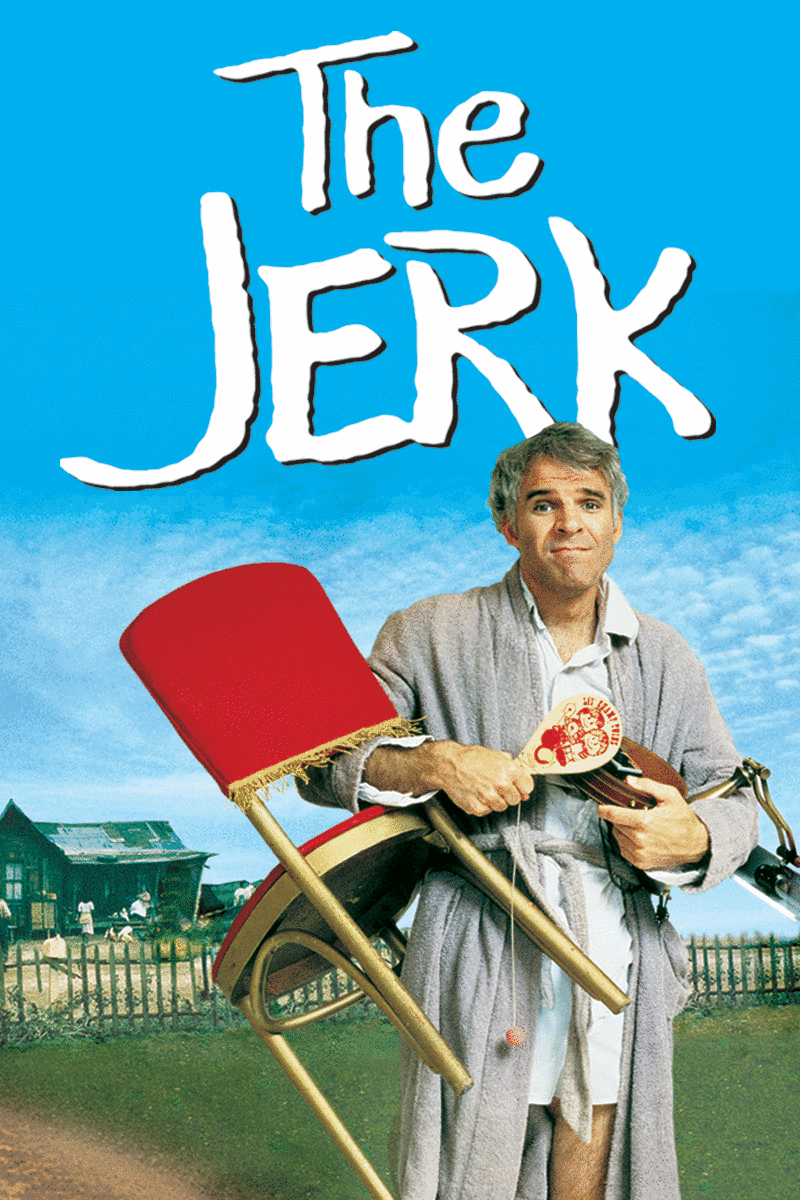

Have a Little Respect: Don’t Be the Jerk

So here is another entry based on the Infoworld article: 12 Effective Habits of Indispensable IT Pros – Ditch the slackers, take on dirty work, do it with data — here’s how to get the inside track on a highly rewarding career in IT – written by Dan Tynan

So when I see the word “Jerk”, I can’t help but think of Steve Martin. You can’t help but love the heartwarming story about the life of Navin R. Johnson. But I don’t think that Navin is the type of jerk Mr. Tynan is talking about as he presents Habit # 9.

Effective IT habit No. 9: Don’t be a jerk
You might be the world’s most brilliant coder or the industry’s leading expert on user interface design. But if nobody likes you, your head is on the chopping block. Given the often challenging personality types drawn to technology, this is especially true for IT.

“Personality goes a long way when it comes time to make cuts in an organization,” notes Nathan Letourneau, director of marketing for PowerWise USA, makers of PC power management software. “Companies prefer people with positive attitudes and a good work ethic, even if they aren’t as highly skilled as another. Don’t be a pain in the butt or overly negative. This isn’t to say you shouldn’t speak your mind, but just make sure you’re respectful when doing it.”

Ultimately, managers like to get rid of the troublemakers and malcontents first, says Engel: “At the end of the day, it’s the person that makes the work environment of the other coworkers better that gets promoted and is the last to leave in a layoff.”


RN Commentary: R.E.S.P.E.C.T. find out what it means to me.

That is not just the opening line to Aretha Franklin’s 1967 smash hit song; Respect is the cornerstone for how we should treat each other in the work place. You don’t have to like every single person you work with and you certainly don’t have to be best friends with all your co-workers. However, you should engage everyone around you (co-workers, vendors, customers) with a basic level of respect. You can be firm with people, disagree on things, even have lively arguments without breaking the basic tenets of respect. You should carry forth your daily activities with respect for others and you should expect the same coming back at you from others.

I also think maintaining a positive attitude is important. There is a constant stream of negative news coming at us from all angles. Media outlets give us constant bad news – wars, murders, weak economic indicators, potential collapse of the Euro, bad earnings reports from all kinds of companies. You even hear bad news at work – unhappy customers, lost customers, budget cuts, missed OI targets. It is very easy to slip into a “woe is me” attitude where everything is negative and you begin thinking that things will never get better. But we can’t fall into that trap – we need to see the problems we are facing at work (or outside of work) as Opportunities. Opportunities for us to make things better. Opportunities for us to excel professionally and personally by being the ones to solve the problems. That takes maintaining a positive outlook and turning that negative energy into trying to make things better.

So I guess my take is a little softer than “Don’t be a Jerk”, but yeah that too: Don’t Be a Jerk!!

Avoid the Slacker, Find the Mentor

The whole idea of creating this blog actually started last week when I read an article on Infoworld written by Dan Tynan. The title of the article was:

12 Effective Habits of Indispensable IT Pros – Ditch the slackers, take on dirty work, do it with data — here’s how to get the inside track on a highly rewarding career in IT

The article listed 12 tips on how to be a better IT professional. After reading the article, I decided I wanted to share the list with my team of 50+ IT professionals. It was a fairly long article so I decided to break it up into a series of 12 daily messages. Each day I sent the team via email (old school baby) one of the 12 Habits along with the insight of Mr. Tynan. I also added my own commentary about my take on the habit and how it could be applied to our business. Each day my commentary section grew longer and longer and I started to realize that many of these tips reached beyond just the IT realm and applied to all facets of business. That is what made me finally decide it was time to enter the world of blogging.

While I probably will not share all 12 of the habits presented in the article, I do think several of the next blog entries will use that article as a basis. For if no other reason than the fact that I love the word “slacker” I think this is my favorite one:

Effective IT habit No. 6: Ditch the slackers, find a mentor
Hanging with a crew that likes to take long lunches and knock off at five (or earlier)? You’re not doing your career any good, says David Maxfield, author of “Change Anything: The New Science of Personal Success,” a book about alter your career-limiting habits.

“The habits that hold you back are likely enabled, tolerated, or encouraged by others,” he says. “Use positive peer pressure by surrounding yourself with hardworking friends who share your career goals. Distance yourself from the office slackers.”

Instead, Maxfield advises you seek someone with more experience to steer your career in a positive direction. “Find a trusted mentor,” he says. “That will help you navigate the career development opportunities that exist within the organization.”

My Commentary: I love the title of this one – mainly because the early 90’s Richard Linklater movie “Slacker” was filmed in Austin. So every time I see the word “slacker” I think of Austin as it was back in my college days. Back when Austin was better known as a college town full of highly educated slackers. If you have never seen the movie, find it on Netflix, Hulu or whatever video service you prefer and check it out.

So last week, I encouraged everyone in the IT organization to go out and interact with people. And now here I am sharing something that says “watch out who you hang with.” While I could ramble on about slackers and the pros and cons of hanging out with them, I instead want to focus on the last piece of this installment – the mentor.

Having a mentor is a great thing for anyone looking to grow professionally. That mentor may be someone within the company or someone you have worked with in the past or just a person within your community that has been successful. I found my mentor about 15 years ago. He was the lead partner in the Austin office of the consulting firm I was working for at the time. His name was Bob Glickert (yeah I know – funny because I don’t like being called Bob.) As time went by, I just called him Bobby G.

Although I was just an entry-level consultant, I engaged him in regular conversations about the inner workings of the firm, how projects were priced out, how profitability of jobs was measured – all things that had nothing directly to do with my day-to-day tasks as an entry-level guy. But I learned a ton about business from those conversations. With him as my mentor and my willingness to travel 6 days a week and work 100+ hours a week , including one week where I charged 142 hours, I quickly went up the ranks from Consultant to Sr. Consultant to Manager in about 2 1/2 years.

I worked on some good projects and some really bad ones, but I learned from each one of them. Having that close relationship with him also gave me insight into a transition of the firm from a partnership to a public company. And while going public didn’t go that well ( I learned first hand what having “underwater stock options” was all about) that transition alone taught me tons about the world of big business. I look back on that 5 years as the time when I transformed from being an accountant to being a technology consultant to becoming a businessman. Having Bob as my mentor made that change possible.

When I left that firm 10+ years ago to come to Harte-Hanks, I continued to keep in touch with him. We would talk on the phone once a month and would meet for lunch every couple of months. I would use him as a sounding board for ideas and get advice on how he would handle certain issues that I was facing. It is 10 years later, and while he is now retired and spends most of his time in the mountains of New Mexico, we still keep in contact and I still consider him an influence in my career. I look back at my development and growth in the past 15 years and I know I owe much of it to his guidance.

So my advice to you: 1) if you don’t have a mentor, find one and 2) if you do have a mentor make sure you continue to leverage that relationship for as long as you can.